
A guest decides whether a restaurant is worth their evening in the first five seconds — and most of that judgment happens from the sidewalk. The facade material, the scale of the entrance, the quality of light visible through glass at dusk: these are design decisions, not accidents. They are also the most frequently neglected ones.
The Design Challenge: A Restaurant is Two Projects in One
Wasim Decor approaches restaurant design in Muscat as a single continuous project with two inseparable dimensions: the exterior identity that draws guests from the street, and the interior environment that sustains their comfort, appetite, and desire to return. Most restaurant fit-outs treat these as separate conversations — one with a graphic designer who handles the sign, another with an interior decorator who selects chairs. The result is a disconnect that guests feel instinctively, even if they never articulate it.
The restaurant market in Muscat is maturing. Dining has become experiential, and guest expectations — among residents and visitors alike — have shifted toward environments that communicate intent before a menu is opened. A restaurant’s design is its first course: it signals the price point, conveys the cuisine’s character, and declares whether this is a place for a quick lunch or a deliberate evening out.
Wasim Decor designed this framework for restaurant projects in Muscat by reconciling two pressures that traditionally work against each other: the atmospheric ambitions of the dining experience and the operational demands of a production kitchen running at full capacity. The exterior, interior, and kitchen are designed simultaneously — never allowing one to develop in isolation from the systems that support the others. Ideal for restaurant owners and F&B investors in Muscat, this integrated approach prevents the costly misalignments that emerge when design decisions are made in sequence rather than in concert.
Exterior Design — The First Impression is Architecture
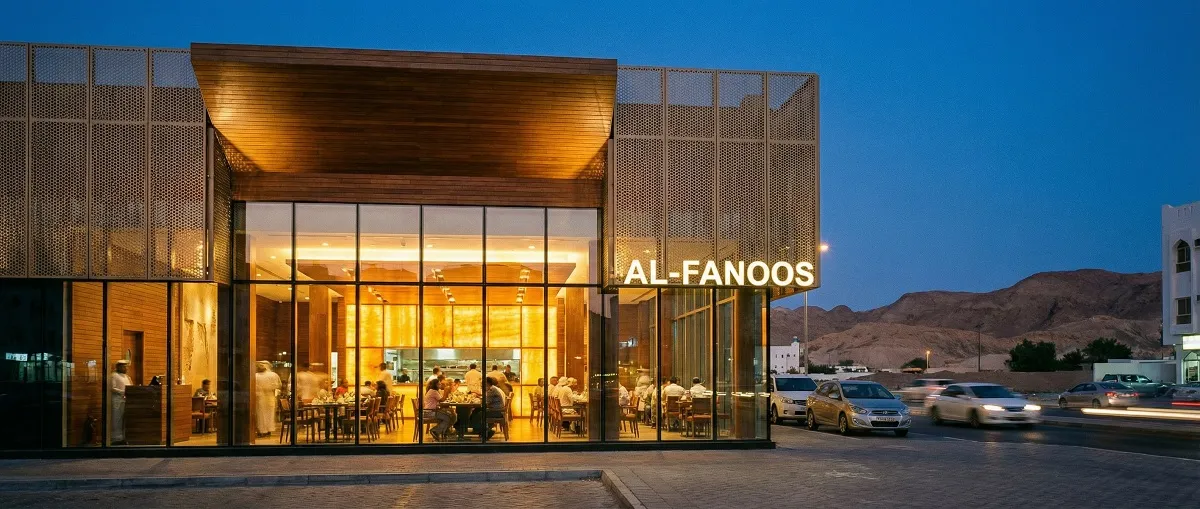
Restaurant exterior design is the discipline of earning trust before a guest touches the door. The facade is not a surface for mounting a logo — it is the restaurant’s architectural introduction, a composition of material, proportion, and transparency that speaks the dining experience’s language from twenty meters away.
Facade and Street Presence
A facade establishes a restaurant’s visual position within its commercial surroundings. The relationship between solid wall and glazed opening, the texture and tone of cladding materials, the scale of the entrance relative to the street frontage — these decisions determine whether a restaurant reads as welcoming, intimate, casual, or considered from a passing car. In Muscat, where evening driving culture means many first impressions are formed through a windshield at moderate speed, facade legibility at distance matters as much as fine detail up close.
Signage integration is treated as an architectural act, not a graphic one. The restaurant’s name and brand communication are designed into the facade composition from the earliest sketches rather than applied after construction by a separate contractor. The result is coherence — the sign looks like it was always part of the building because it was designed to be. Bolted-on signage, no matter how well-lit, communicates afterthought. Integrated signage communicates intention.
The Entrance Sequence
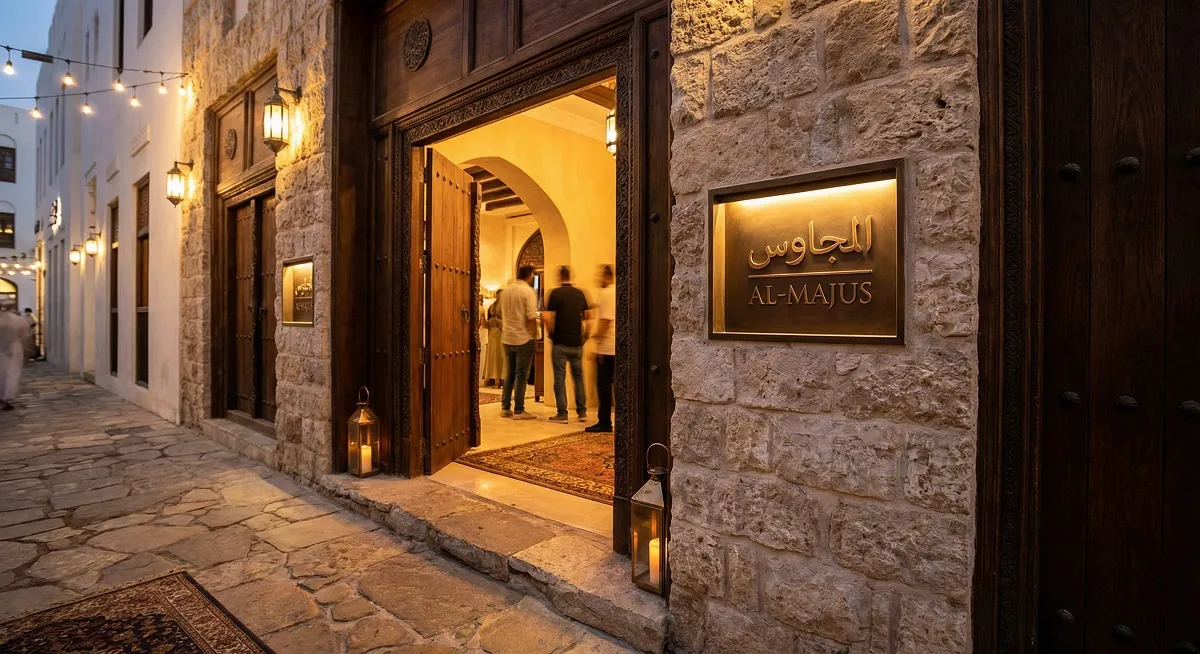
The entrance deserves more design attention than a door specification and a handle selection. In Muscat’s climate, the threshold manages a dramatic transition from exterior heat to conditioned interior air — a shift that can exceed twenty degrees Celsius during summer months. The entrance sequence — the approach path, the door itself, the vestibule or reception zone immediately inside — must make that environmental shift feel graceful rather than jarring. A well-designed entrance lets the guest arrive into the restaurant’s atmosphere gradually, building anticipation rather than delivering thermal shock.
Transparency calibration is critical at this junction. A fully glazed facade offers complete visual access from the street but surrenders the sense of discovery that makes entering a restaurant feel like an event. A largely opaque facade generates mystery but risks appearing unwelcoming, particularly to guests unfamiliar with the concept. The precise balance between visibility and enclosure depends on the restaurant’s positioning, its cuisine, and the emotional arc it wants a guest to experience between the sidewalk and the seat.
Interior Design — Atmosphere Is Engineered, Not Improvised
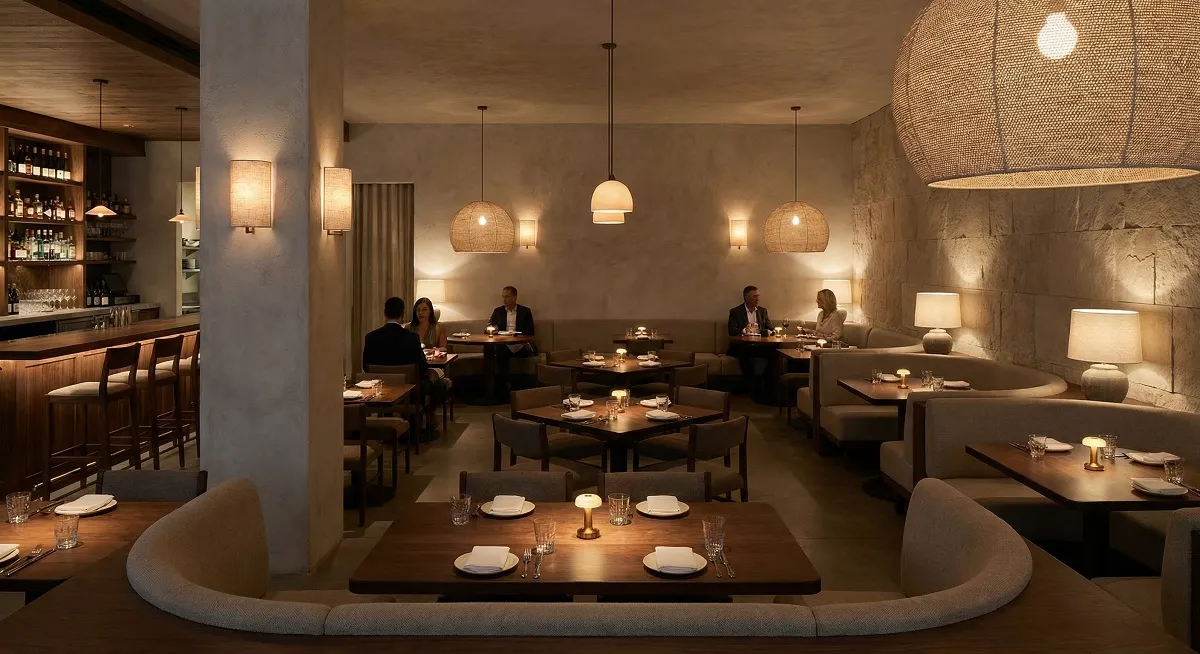
The dining room must deliver on the promise the exterior made. Wasim Decor’s approach to restaurant interior design in Muscat grounds every decorative decision in spatial logic — understanding precisely how guests will move through the room, where they will pause, what they will see at each turning point, and how the space will feel at twenty percent occupancy versus ninety.
Guest Circulation and Seating Strategy
A dining floor is a circulation system before it is a decorative environment. Guests entering need immediate orientation: a host position, a clear forward path, a composed first view of the room that reveals its best angle. The walk from entrance to table should feel guided without feeling controlled — sight lines managed so the guest sees the dining room at its most architecturally composed, never the service corridor, the kitchen swing door, or the utility closet.
Seating within the restaurant is organized into zones that provide distinctly different experiences under a single roof. Perimeter tables along glazed walls carry a different atmospheric quality than deep banquettes set against textured interior surfaces, or elevated platform seating with a surveying view across the dining floor. Each position offers its own version of the restaurant. Guests develop preferences, and those preferences become reasons to return. None of this is accidental — each zone is planned as an intentional spatial experience.
Service circulation operates on paths separate from guest movement. Servers need to travel efficiently between kitchen and table through routes that minimize sight-line crossings with seated guests. This parallel circulation geometry is designed into the floor plan at the earliest stage. It cannot be resolved by rearranging furniture once the walls are finished. The separation of guest movement and service movement is an architectural decision, not an operational one.
Lighting and the Physics of Appetite
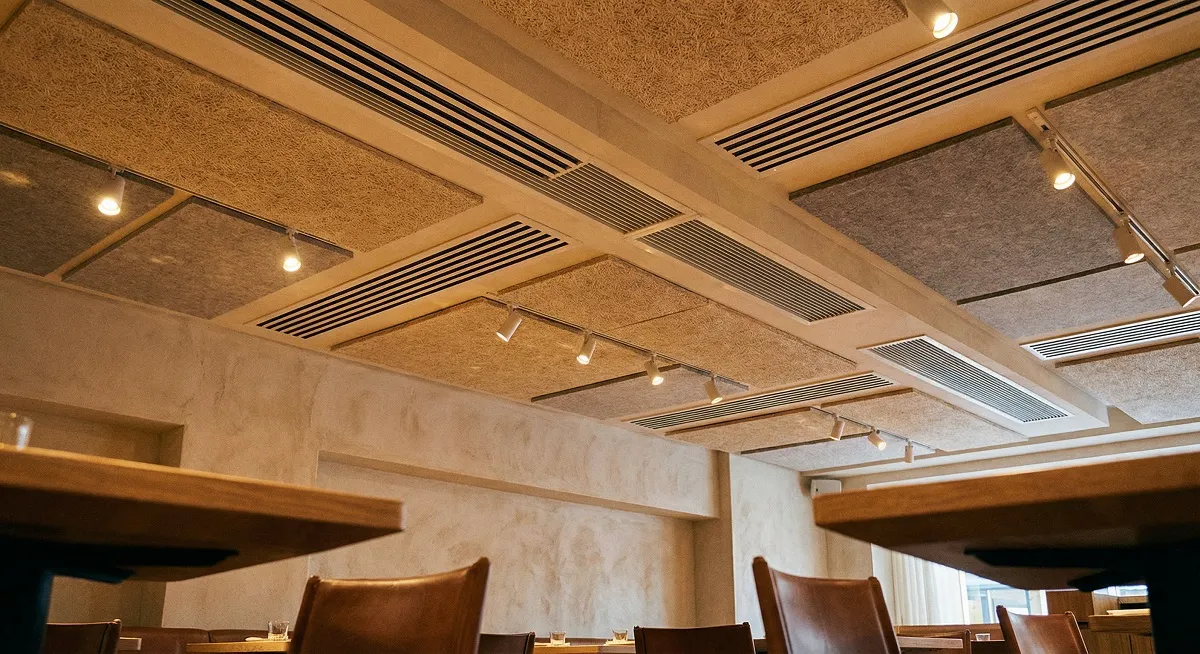
Lighting across the restaurant interior works in distinct layers, each handling a different aspect of the dining experience. Ambient illumination establishes the room’s overall mood and ensures basic spatial legibility — guests need to read menus, navigate between tables, and find restrooms without strain. Accent lighting directs attention toward architectural surfaces, decorative textures, or compositional focal points within the room. Table-level lighting — the most intimate and commercially consequential layer — determines how food appears on porcelain and how faces look across the table.
These layers shift in balance through the day. Lunch service demands brightness, functionality, and a tempo that supports faster turnover. Evening service requires warmth, controlled shadow, and the intimacy that keeps guests seated longer. Wasim Decor designs restaurant lighting systems that accommodate this transition through dimming and scene programming, allowing the same room to feel appropriately energetic at noon and genuinely atmospheric by nine.
Color temperature selection follows the food. A poorly chosen lamp temperature can make a carefully plated dish appear grey and lifeless. The right color temperature enhances natural tones — the caramelized surface of roasted proteins, the vibrancy of herb garnishes, the golden crust of fresh bread — making the table itself the most visually compelling element in the room. When the lighting is correct, guests photograph their food and share it. When it is wrong, they eat quickly and leave without the impulse to document the experience.
Back-of-House — The Kitchen the Guest Never Sees
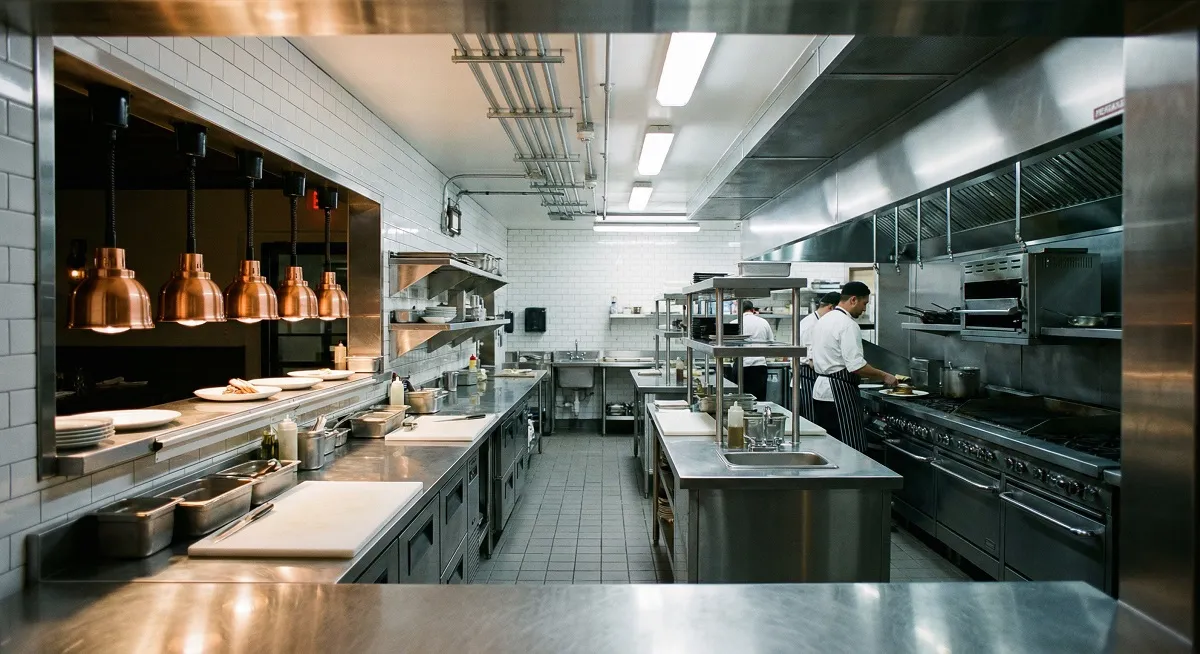
The invisible half of a restaurant determines whether the visible half can sustain itself through a three-hundred-cover evening. Wasim Decor applies the same spatial rigor to kitchen design that it brings to dining room atmosphere — because one cannot exist without the other.
Separation between clean preparation zones and heavy production areas is foundational to every restaurant kitchen layout. Raw material processing, heat-intensive cooking, cold preparation, and final plating each occupy distinct territories within the back-of-house plan. This zone separation reduces cross-contamination risk, supports hygiene compliance, and creates production workflows that operate without internal collision — even during peak service when speed and pressure are at their highest.
The path of food follows a single direction. Raw materials enter the kitchen through one access point, move through preparation and cooking in a linear progression, and exit as finished plates through the service pass toward the dining floor. Waste follows its own dedicated route that never intersects guest-accessible space. At no point does a delivery crate travel the same corridor as a finished entrée.
Positioning the service pass is a decision that ripples through the entire guest experience. Its location relative to the dining floor determines how quickly food reaches the table at optimal temperature. The kitchen door itself — its placement, swing arc, acoustic sealing, and visual screening — directly affects dining room noise levels, ambient temperature stability, and the degree to which production activity is perceptible to seated guests. These are not finishing details. They are among the most consequential architectural decisions in the entire project.
Technical Coordination Behind the Design
Restaurant fit-out in Muscat requires mechanical, electrical, and plumbing coordination calibrated specifically to commercial food service environments — a category of technical work fundamentally different from retail or office fit-out. Wasim Decor sequences this coordination so that all kitchen equipment specifications and floor positions are confirmed before final MEP drawings are produced. Electrical loads are derived from actual equipment data sheets, not from generic per-square-meter allowances that inevitably prove inadequate on commissioning day.
Kitchen ventilation, hood exhaust rates, grease management systems, and gas supply lines are sized to the real thermal and airflow demands of the specified equipment. A mismatched exhaust system does not merely underperform — it fills a dining room with kitchen odor, compromises air quality, and creates a problem that cannot be solved without tearing open the ceiling after opening.
Compliance with Muscat municipality regulations and civil defense standards is built into the design from its first iteration. Ventilation rates, fire suppression requirements for kitchen hood systems, emergency egress widths, accessible restroom provisions, and food preparation area certifications are integrated as design drivers rather than retroactive corrections. When these requirements are addressed during construction — as they often are in poorly managed projects — the cost and time impact is severe. When they are embedded from the start, they become invisible constraints that shape better design.
Climate control across the restaurant is designed as a zoned system reflecting the radically different environmental demands of each area. The dining floor requires stable, comfortable temperature and humidity. The kitchen operates under intensive heat extraction and make-up air regimes. Transitional zones between front and back of house manage the gradient between these two environments, preventing the rush of hot, humid air that escapes every time a poorly designed kitchen door swings open.
What Integrated Restaurant Design Delivers
A restaurant conceived as a unified system — exterior facade through dining interior through production kitchen — operates at a fundamentally different level than one assembled from disconnected vendor decisions made in sequence. The exterior captures attention at the right moment and sets expectations accurately. The interior sustains an atmosphere that matches those expectations across a two-hour sitting. The kitchen delivers food at the pace and standard the dining room promises, without leaking noise, heat, or chaos into the guest experience.
For restaurant owners and F&B investors in Muscat, this integrated design approach removes the operational friction that surfaces within the first weeks of opening a poorly coordinated space. Staff move through spatial sequences that feel intuitive because they were designed for the specific movements required. Guests experience a continuous arc from the first glimpse of the facade to the moment they settle their bill — no jarring transitions, no contradictions between what the exterior promised and what the interior delivers. Maintenance and service access follow logical, pre-planned paths rather than requiring furniture displacement and guest disruption.
Wasim Decor manages restaurant design in Muscat as a complete end-to-end scope: concept development, exterior and interior design, kitchen planning, equipment coordination, MEP engineering, construction oversight, and operational handover. No aspect of the restaurant’s physical environment develops in isolation from the design intent that connects every other element. The space is conceived whole and delivered whole.
Planning a restaurant in Muscat — from an independent dining concept to a multi-location F&B brand — requires a design partner capable of connecting exterior identity, interior atmosphere, and kitchen performance into a single coherent environment. Contact Wasim Decor to discuss your project scope, site conditions, and vision. Explore our Google Business Profile for project photography, verified client reviews, and additional examples of restaurant and commercial design work across Muscat.
Restaurant fit-out timelines in Muscat depend on project scale, municipal permit processing, equipment procurement lead times, and design complexity. Wasim Decor manages the entire schedule from concept design through construction and handover, coordinating all trades and authorities to maintain an efficient delivery program.
Designing both exterior and interior through a single design firm ensures visual coherence and functional alignment across the entire guest experience. Wasim Decor handles both scopes as an integrated project, preventing the material and atmospheric disconnects that emerge when facade design and interior decoration develop through separate teams.
Restaurant fit-out in Muscat typically requires municipal building permits, civil defense approvals covering fire safety and kitchen ventilation compliance, and health authority clearances for food preparation areas. Wasim Decor integrates all compliance requirements into the design and coordinates with relevant authorities throughout the project.